
Drinking and drug use are often treated as ordinary parts of college life. Students see them at parties, hear friends joke about them, and may use substances to relax, celebrate, fit in, or escape academic pressure. Because the behavior is common, it can begin to feel harmless. It is not.
This article is not a demand for complete abstinence. College students will make their own choices, but those choices should be based on accurate information rather than assumptions or peer pressure. Harm reduction gives students practical ways to lower risk, recognize emergencies, and protect themselves and the people around them.
Why Students Ignore Traditional Warnings
Many prevention messages begin and end with “do not drink” or “do not use drugs.” That approach does not always match students’ experiences. Some students already use substances, while others are surrounded by friends who do. A warning that offers no guidance beyond abstinence can feel unrealistic and may be ignored.
Students may use substances because of stress, curiosity, loneliness, social pressure, or the desire to belong. Recognizing those motives does not mean approving of every decision. It means effective prevention must address the situations students actually face. Harm reduction begins by giving students information they can use when substance use occurs.
When Normal Behavior Becomes Dangerous
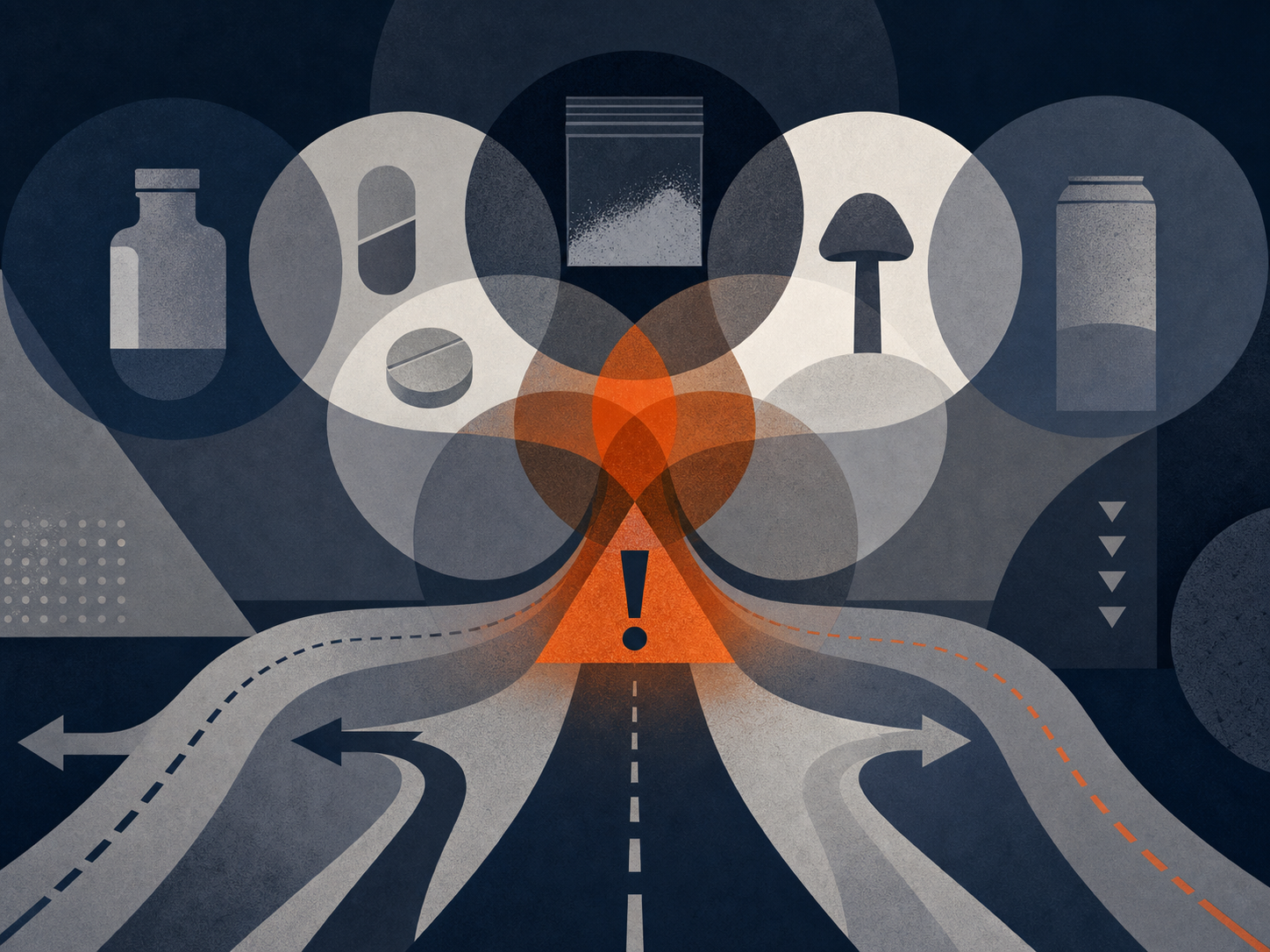
Risk increases when more than one substance is used within a short period. This is called polysubstance use, and it may happen intentionally or without a person realizing another drug was present. Drug combinations can produce stronger and more unpredictable effects than one substance alone (Centers for Disease Control and Prevention, “Polysubstance Use Facts”).
A dangerous myth is that stimulants and depressants “balance each other out.” They do not. A stimulant may hide some of the sleepiness caused by alcohol, opioids, or sedatives, but it does not cancel the effects on breathing, heart rate, blood pressure, or judgment. Feeling more awake can lead someone to take more while the body remains under serious strain. Alcohol can also make opioids and sedatives more dangerous because all can slow breathing (Centers for Disease Control and Prevention, “Polysubstance Use Facts”; “Drinking Alcohol”).
Unknown pills create another major risk. Counterfeit pills may resemble medications such as Xanax, Adderall, or oxycodone while containing fentanyl or another unexpected substance. Appearance alone cannot confirm what a pill contains. A pill that did not come from a licensed pharmacy and was not prescribed to the person taking it should be treated as unsafe (Drug Enforcement Administration).
Know the Warning Signs
It can be difficult to tell whether someone is intoxicated or experiencing an overdose. Warning signs include being unable to wake up, slow or irregular breathing, choking or gurgling sounds, vomiting, seizures, severe confusion, clammy skin, or blue, gray, or unusually pale lips and fingernails. A person does not need to show every symptom before the situation becomes an emergency (National Institute on Alcohol Abuse and Alcoholism; Centers for Disease Control and Prevention, “What to Do”).
Do not assume that an unconscious person can safely “sleep it off.” When in doubt, treat the situation as an overdose:
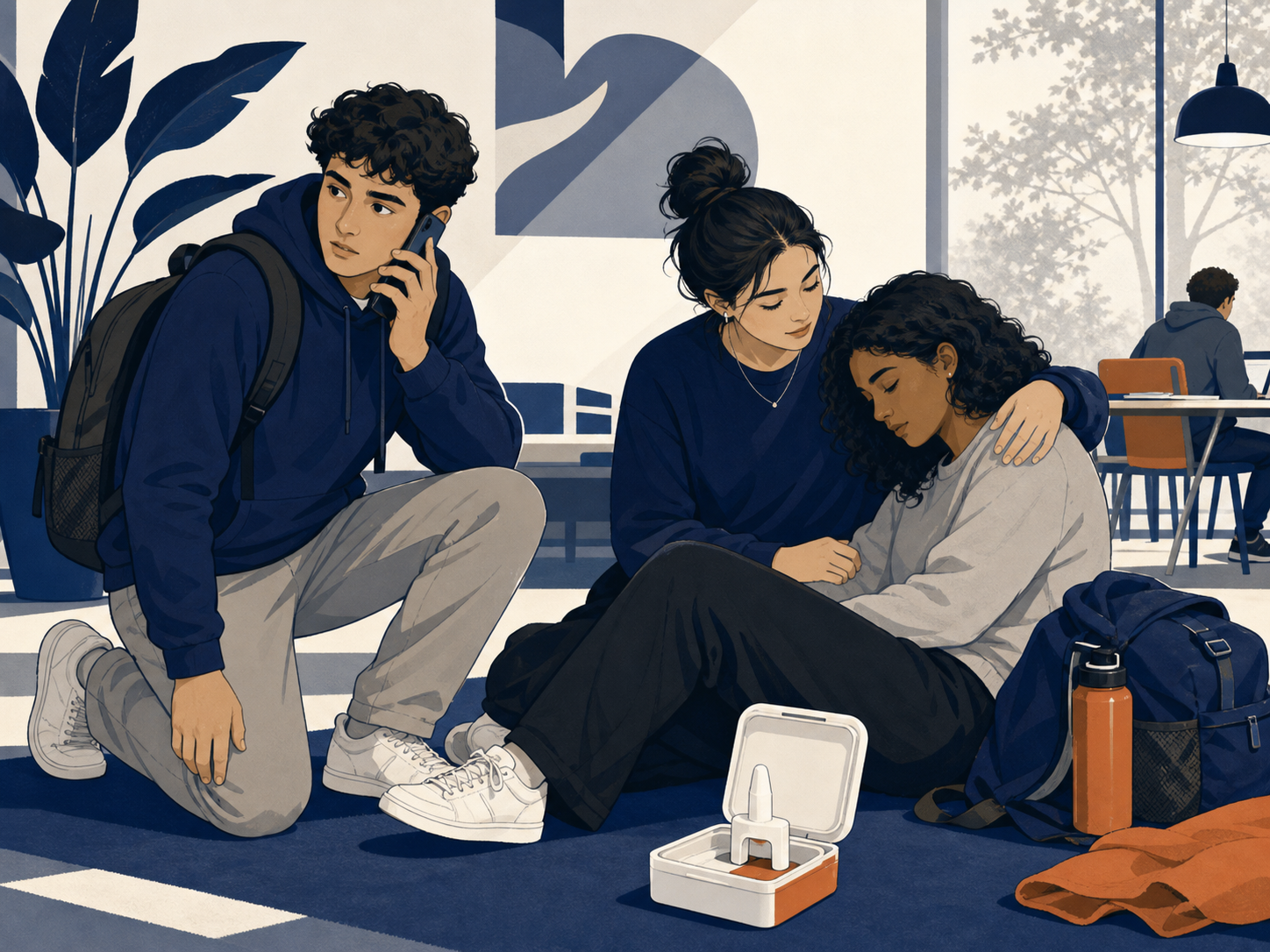
- Call 911 immediately.
- Give naloxone if it is available and opioid involvement is possible.
- Try to keep the person awake and breathing.
- Place the person on their side to reduce the risk of choking.
- Stay until emergency help arrives.
Naloxone can reverse an opioid overdose and restore breathing when administered in time. It will not harm someone who is overdosing on a non-opioid drug, so it is appropriate to use when opioid exposure is possible or unknown. Emergency services are still necessary because more than one dose may be needed (Centers for Disease Control and Prevention, “Lifesaving Naloxone”; “What to Do”).
Harm Reduction Students Can Actually Use
Harm reduction does not make substance use safe. It lowers the chance that a risky decision becomes fatal. Students who choose to use substances should avoid mixing them, avoid using alone, and never take unknown pills. They should know what their friends have taken, arrange transportation before going out, keep their phones charged, and stay with anyone who becomes dangerously impaired.
Looking out for friends also means speaking up before the situation becomes critical. Stop someone from driving while impaired. Do not pressure another person to drink more. Check on someone who disappears from the group. Do not leave an unconscious person alone. No one should delay calling 911 because of embarrassment or fear of “ruining the night.” A medical emergency matters more than avoiding consequences.
Texas Tech Resources
Texas Tech students do not have to wait until substance use becomes a crisis to seek support. RISE offers Substance Use and Wellness Coaching, including Raider Restart and BASICS. RISE can be reached at 806-742-2110. The Center for Students in Addiction Recovery can be reached at 806-742-2891, and Student Health Services can be reached at 806-743-2848 (Texas Tech University, “Substance Use”; “Student Health Services”).
For an immediate medical emergency, call 911. The Texas Tech Crisis HelpLine is available 24 hours a day at 806-742-5555 for mental-health crises and other urgent concerns (Texas Tech University, “Crisis Intervention Services”).
Make the Choice Before the Emergency
College students should be free to make their own decisions, but freedom does not remove risk or responsibility. Substance use can become dangerous quickly when drugs are mixed, pills come from unknown sources, or warning signs are ignored. Harm reduction does not require approving of substance use or promising complete abstinence. It requires planning ahead, understanding the risks, recognizing an emergency, calling for help, and refusing to leave a friend alone when that person’s life may be in danger.
Common does not mean safe. Know the risks. Avoid dangerous combinations. Call for help. Look out for your friends.
Works Cited
- Centers for Disease Control and Prevention. “Drinking Alcohol While Using Other Drugs Can Be Deadly.” Centers for Disease Control and Prevention, 31 Jan. 2025, www.cdc.gov/alcohol/about-alcohol-use/other-drug-use.html. Accessed 20 July 2026.
- Centers for Disease Control and Prevention. “Lifesaving Naloxone.” Stop Overdose, 11 June 2025, www.cdc.gov/stop-overdose/caring/naloxone.html. Accessed 20 July 2026.
- Centers for Disease Control and Prevention. “Polysubstance Use Facts.” Stop Overdose, 2 Apr. 2024, www.cdc.gov/stop-overdose/caring/polysubstance-use.html. Accessed 20 July 2026.
- Centers for Disease Control and Prevention. “What to Do If You Think Someone Is Overdosing.” Stop Overdose, 2 Apr. 2024, www.cdc.gov/stop-overdose/response/index.html. Accessed 20 July 2026.
- Drug Enforcement Administration. “One Pill Can Kill.” Drug Enforcement Administration, www.dea.gov/onepill. Accessed 20 July 2026.
- National Institute on Alcohol Abuse and Alcoholism. “Understanding the Dangers of Alcohol Overdose.” National Institute on Alcohol Abuse and Alcoholism, www.niaaa.nih.gov/publications/brochures-and-fact-sheets/understanding-dangers-of-alcohol-overdose. Accessed 20 July 2026.
- Texas Tech University. “Crisis Intervention Services.” Student Counseling Center, www.depts.ttu.edu/scc/crisis-intervention-services/index.php. Accessed 20 July 2026.
- Texas Tech University. “Student Health Services.” Student Health Services, www.depts.ttu.edu/studenthealth/. Accessed 20 July 2026.
- Texas Tech University. “Substance Use & Wellness Coaching.” Risk Intervention & Safety Education, www.depts.ttu.edu/rise/raidercoaching.php. Accessed 20 July 2026.